Showing posts with label WhatIs. Show all posts

Thursday, February 21, 2013

Kung fu

Kung fu atau gongfu (功夫, Pinyin: gōngfu) adalah ilmu bela diri yang berasal dari Tiongkok. Akan tetapi, arti kata Kung fu sebenarnya memiliki makna yang jauh lebih luas, yakni sesuatu yang diperoleh dalam jangka waktu yang lama dan dengan ketekunan yang tinggi. Dengan demikian, seorang ahli masak yang hebat pun dapat dikatakan memiliki Kung fu yang tinggi.
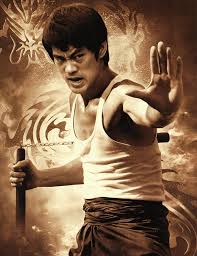


Selain kata Kung fu, istilah Wushu dan Kundao atau Kuntao juga sering dipakai untuk menyebut ilmu bela diri dari Tiongkok tersebut. Ilmu Kung fu yang sudah menyebar ke Asia Tenggara (terutama Indonesia) pada masa lalu disebut Kuntao, demikian menurut Donn Draeger dalam bukunya yang berjudul Weapons and Fighting Arts of Indonesia. Akan tetapi istilah Kuntao tersebut sudah sangat jarang dipergunakan pada masa sekarang ini.

Pada awal mulanya, istilah Ilmu atau kemampuan Bela Diri dalam masyarakat Tiongkok adalah Ilmu Silat atau Wushu, dan bukan "Kungfu". Istilah Kungfu pada masa lalu tidaklah sepopuler seperti saat ini. Kungfu sendiri lebih menunjuk kepada suatu keahlian dan keuletan yang khusus dan teruji unggul, misalnya keahlian memasak, keahlian bercocok tanam, dan lain-lain. Istilah Kungfu menjadi populer setelah seorang legenda ilmu bela diri, yakni Bruce Lee mempopulerkan istilah Kungfu di belahan dunia Barat. Tersentak dengan kemampuan, kecepatan dan kekuatan Sang Legenda, istilah Kungfu menjadi sangat populer dan identik dengan Ilmu Bela Diri Tiongkok (China) hingga kini.

Ilmu bela diri Kungfu pada mulanya berkembang dari kebutuhan dan kemampuan manusia untuk bertahan hidup, baik untuk membela diri dari berbagai jenis serangan binatang buas, berburu untuk mendapatkan makanan, maupun untuk berperang melawan kelompok manusia lain yang dianggap menjadi ancaman terhadap keamanan hidup mereka. Dengan semakin berkembangnya ilmu pengetahuan tentang obat-obatan dan tubuh manusia di Tiongkok kuno - serta perang saudara yang berkepanjangan, Seni Bela Diri Kungfu pun berkembang pesat dan menyebar luas, sehingga membawa banyak kontribusi dan memengaruhi cikal bakal berbagai jenis ilmu bela diri di Asia, seperti Karate, Jujitsu, Taekwondo, Judo, HapKiDo dan lain sebagainya.

Kungfu mempunyai sejarah dan merupakan tradisi ilmu bela diri yang sangat panjang, ketat, teruji dan efektif sejak 5.000 tahun yang lalu, bersamaan dengan munculnya aliran kepercayaan Dao (Taoisme) yang kemudian berkembang menjadi agama yang memiliki kekhususan sendiri. Pada tahun 2.500-an mulai bermunculan berbagai aliran Kungfu yang melegenda hingga kini, dimulai dari Kuil atau Vihara Shaolin (Siaw Liem Sie), Wudang (Butong), Omei (Emei-Gobi), Kun Lun, Hua San, Thian San, Khongtong dan lain-lain. Secara umum, terdapat 100 lebih aliran Kungfu dan ribuan jurus serta berbagai jenis ilmu yang unik dan aneh, mulai dari yang paling keras dan ganas (external arts) hingga ilmu yang paling lembut dan ringan seperti kapas (internal arts). Berbagai aliran dan ilmu yang masih eksis hingga kini adalah Hung Gar, Lohan, Ngo Cho, Pek Ho, Eng Jiaw, Qin Na, Wing Chun, Tai Chi Quan, Hsing I, Ba Gua, Yi Quan, Fan Zi Quan, Chang Quan dan lain-lain.

Source: www.wikipedia.com

Monday, February 11, 2013

Tang Dynasty (AD 618–907)

Tang Dynasty was founded by Emperor Gaozu on June 18, 618. It was a golden age of Chinese civilization with significant developments in art, literature, particularly poetry, and technology. Buddhism became the predominant religion for common people. Chang'an (modern Xi'an), the national capital, was the largest city in the world of its time.
Started by the second emperor, Taizong, military campaigns were launched to dissolve threats from nomadic tribes, extend the border, and submit neighboring states into a tributary system. Military victories in the Tarim Basin kept the Silk Road open, connecting Chang'an to Central Asia and areas far to the west. In the south, lucrative maritime trade routes began from port cities such as Guangzhou. There was extensive trade with distant foreign countries, and many foreign merchants settled in China, boosting a vibrant cosmopolitan culture. The Tang culture and social systems were admired and adapted by neighboring countries like Japan. Internally, the Grand Canal linked the political heartland in Chang'an to the economic and agricultural centers in the eastern and southern parts of the empire.
Underlying the prosperity of the early Tang Dynasty was a strong centralized bureaucracy with efficient policies. The government was organized as "Three Departments and Six Ministries" to separately draft, review, and implement policies. These departments were run by royal family members as well as scholar officials who were selected from imperial examinations. These practices, which matured in the Tang Dynasty, were to be inherited by the later dynasties with some modifications.
The Tang land policy – the "Equal-field system" – claimed all lands as imperially owned, and were granted evenly to people according to the size of the households. The associated military policy – the "Fubing system" – conscripted all men in the nation for a fixed duty period each year in exchange for their land rights. These policies stimulated rapid growth of productivity, while boosting the army without much burden on the state treasury. However, lands gradually fell into the hands of private land owners, and standing armies were to replace conscription towards the middle period of the dynasty.
The dynasty continued to flourish under Empress Wu Zetian, the only empress regnant in Chinese history, and reached its zenith during the reign of Emperor Xuanzong, who oversaw an empire that stretched from the Pacific to the Aral Sea with at least 50 million people.
At the zenith of prosperity of the empire, the An Lushan Rebellion was a watershed event that devastated the population and drastically weakened the central imperial government. Regional military governors, known as Jiedushi, gained increasingly autonomous status while formerly submissive states raided the empire. Nevertheless, after the An Lushan Rebellion, the Tang civil society recovered and thrived amidst the weakened imperial bureaucracy.
From about 860, the Tang Dynasty declined due to a series of rebellions within China itself and in the former subject Kingdom of Nanzhao to the south. One warlord, Huang Chao, captured Guangzhou in 879, killing most of the 200,000 inhabitants, including most of the large colony of foreign merchant families there.In late 880, Luoyang surrendered to Huang Chao, and on 5 January 881 he conquered Chang'an. The emperor Xizong fled to Chengdu, and Huang established a new temporary regime which was eventually destroyed by Tang forces. Another time of political chaos followed.
(Source: www.wikipedia.com)

Shang Dynasty (c. 1700–1046 BC)

Archaeological findings providing evidence for the existence of the Shang Dynasty, c. 1600–1046 BC, are divided into two sets. The first set – from the earlier Shang period – comes from sources at Erligang, Zhengzhou, and Shangcheng. The second set – from the later Shang or Yin (殷) period – is at Anyang, in modern-day Henan, which has been confirmed as the last of the Shang's nine capitals (c. 1300–1046 BC).[citation needed] The findings at Anyang include the earliest written record of Chinese past so far discovered: inscriptions of divination records in ancient Chinese writing on the bones or shells of animals – the so-called "oracle bones", dating from around 1200 BC.
The Shang Dynasty featured 31 kings, from Tang of Shang to King Zhou of Shang. In this period, the Chinese worshipped many different gods — weather gods and sky gods — and also a supreme god, named Shangdi, who ruled over the other gods. Those who lived during the Shang Dynasty also believed that their ancestors — their parents and grandparents — became like gods when they died, and that their ancestors wanted to be worshipped, too, like gods. Each family worshipped its own ancestors.
The Records of the Grand Historian states that the Shang Dynasty moved its capital six times. The final (and most important) move to Yin in 1350 BC led to the dynasty's golden age. The term Yin Dynasty has been synonymous with the Shang dynasty in history, although it has lately been used to specifically refer to the latter half of the Shang Dynasty.
Chinese historians living in later periods were accustomed to the notion of one dynasty succeeding another, but the actual political situation in early China is known to have been much more complicated. Hence, as some scholars of China suggest, the Xia and the Shang can possibly refer to political entities that existed concurrently, just as the early Zhou is known to have existed at the same time as the Shang.
Although written records found at Anyang confirm the existence of the Shang dynasty,[citation needed] Western scholars are often hesitant to associate settlements that are contemporaneous with the Anyang settlement with the Shang dynasty. For example, archaeological findings at Sanxingdui suggest a technologically advanced civilization culturally unlike Anyang. The evidence is inconclusive in proving how far the Shang realm extended from Anyang. The leading hypothesis is that Anyang, ruled by the same Shang in the official history, coexisted and traded with numerous other culturally diverse settlements in the area that is now referred to as China proper.
(Source: www.wikipedia.com)

Sunday, February 10, 2013

Agriculture

Agriculture, also called farming or husbandry, is the cultivation of animals, plants, fungi, and other life forms for food, fiber, biofuel and other products used to sustain human life. Agriculture was the key development in the rise of sedentary human civilization, whereby farming of domesticated species created food surpluses that nurtured the development of civilization. The study of agriculture is known as agricultural science. Agriculture generally speaking refers to human activities, although it is also observed in certain species of ant and termite.The word agriculture is the English adaptation of Latin agricultūra, from ager, "a field", and cultūra, "cultivation" in the strict sense of "tillage of the soil". Thus, a literal reading of the word yields "tillage of fields".
The history of agriculture dates back thousands of years, and its development has been driven and defined by greatly different climates, cultures, and technologies. However, all farming generally relies on techniques to expand and maintain the lands that are suitable for raising domesticated species. For plants, this usually requires some form of irrigation, although there are methods of dryland farming; pastoral herding on rangeland is still the most common means of raising livestock. In the developed world, industrial agriculture based on large-scale monoculture has become the dominant system of modern farming, although there is growing support for sustainable agriculture (e.g. permaculture or organic agriculture).
Until the Industrial Revolution, the vast majority of the human population labored in agriculture. Pre-industrial agriculture was typically subsistence agriculture in which farmers raised most of their crops for their own consumption instead of for trade. A remarkable shift in agricultural practices has occurred over the past century in response to new technologies, and the development of world markets. This also led to technological improvements in agricultural techniques, such as the Haber-Bosch method for synthesizing ammonium nitrate which made the traditional practice of recycling nutrients with crop rotation and animal manure less necessary.
Modern agronomy, plant breeding, pesticides and fertilizers, and technological improvements have sharply increased yields from cultivation, but at the same time have caused widespread ecological damage and negative human health effects. Selective breeding and modern practices in animal husbandry such as intensive pig farming have similarly increased the output of meat, but have raised concerns about animal cruelty and the health effects of the antibiotics, growth hormones, and other chemicals commonly used in industrial meat production.
The major agricultural products can be broadly grouped into foods, fibers, fuels, and raw materials. In the 21st century, plants have been used to grow biofuels, biopharmaceuticals, bioplastics, and pharmaceuticals.Specific foods include cereals, vegetables, fruits, and meat. Fibers include cotton, wool, hemp, silk and flax. Raw materials include lumber and bamboo. Other useful materials are produced by plants, such as resins. Biofuels include methane from biomass, ethanol, and biodiesel. Cut flowers, nursery plants, tropical fish and birds for the pet trade are some of the ornamental products. Regarding food production, the World Bank targets agricultural food production and water management as an increasingly global issue that is fostering an important and growing debate.
In 2007, one third of the world's workers were employed in agriculture. The services sector has overtaken agriculture as the economic sector employing the most people worldwide. Despite the size of its workforce, agricultural production accounts for less than five percent of the gross world product (an aggregate of all gross domestic products). (Souce: www.wikipedia.com)

History of Biotechnology

Although not normally what first comes to mind, many forms of human-derived agriculture clearly fit the broad definition of "using a biotechnological system to make products". Indeed, the cultivation of plants may be viewed as the earliest biotechnological enterprise.
Agriculture has been theorized to have become the dominant way of producing food since the Neolithic Revolution. Through early biotechnology, the earliest farmers selected and bred the best suited crops, having the highest yields, to produce enough food to support a growing population. As crops and fields became increasingly large and difficult to maintain, it was discovered that specific organisms and their by-products could effectively fertilize, restore nitrogen, and control pests. Throughout the history of agriculture, farmers have inadvertently altered the genetics of their crops through introducing them to new environments and breeding them with other plants — one of the first forms of biotechnology.
These processes also were included in early fermentation of beer. These processes were introduced in early Mesopotamia, Egypt, and India, and still use the same basic biological methods. In brewing, malted grains (containing enzymes) convert starch from grains into sugar and then adding specific yeasts to produce beer. In this process, carbohydrates in the grains were broken down into alcohols such as ethanol. Later other cultures produced the process of lactic acid fermentation which allowed the fermentation and preservation of other forms of food, such as soy sauce. Fermentation was also used in this time period to produce leavened bread. Although the process of fermentation was not fully understood until Louis Pasteur's work in 1857, it is still the first use of biotechnology to convert a food source into another form.
For thousands of years, humans have used selective breeding to improve production of crops and livestock to use them for food. In selective breeding, organisms with desirable characteristics are mated to produce offspring with the same characteristics. For example, this technique was used with corn to produce the largest and sweetest crops.
In the early twentieth century scientists gained a greater understanding of microbiology and explored ways of manufacturing specific products. In 1917, Chaim Weizmann first used a pure microbiological culture in an industrial process, that of manufacturing corn starch using Clostridium acetobutylicum, to produce acetone, which the United Kingdom desperately needed to manufacture explosives during World War I.
Biotechnology has also led to the development of antibiotics. In 1928, Alexander Fleming discovered the mold Penicillium. His work led to the purification of the antibiotic by Howard Florey, Ernst Boris Chain and Norman Heatley, penicillin. In 1940, penicillin became available for medicinal use to treat bacterial infections in humans.
The field of modern biotechnology is generally thought of as having been born in 1971 when Paul Berg's (Stanford) experiments in gene splicing had early success. Herbert W. Boyer (Univ. Calif. at San Francisco) and Stanley N. Cohen (Stanford) significantly advanced the new technology in 1972 by transferring genetic material into a bacterium, such that the imported material would be reproduced. The commercial viability of a biotechnology industry was significantly expanded on June 16, 1980, when the United States Supreme Court ruled that a genetically modified microorganism could be patented in the case of Diamond v. Chakrabarty.Indian-born Ananda Chakrabarty, working for General Electric, had modified a bacterium (of the Pseudomonas genus) capable of breaking down crude oil, which he proposed to use in treating oil spills. (Chakrabarty's work did not involve gene manipulation but rather the transfer of entire organelles between strains of the Pseudomonas bacterium.
Revenue in the industry is expected to grow by 12.9% in 2008. Another factor influencing the biotechnology sector's success is improved intellectual property rights legislation—and enforcement—worldwide, as well as strengthened demand for medical and pharmaceutical products to cope with an ageing, and ailing, U.S. population.
Rising demand for biofuels is expected to be good news for the biotechnology sector, with the Department of Energy estimating ethanol usage could reduce U.S. petroleum-derived fuel consumption by up to 30% by 2030. The biotechnology sector has allowed the U.S. farming industry to rapidly increase its supply of corn and soybeans—the main inputs into biofuels—by developing genetically modified seeds which are resistant to pests and drought. By boosting farm productivity, biotechnology plays a crucial role in ensuring that biofuel production targets are met. (Source: www.wikipedia.com)

Friday, February 8, 2013

Capacitor voltage transformer

A capacitor voltage transformer (CVT), or capacitance coupled voltage transformer (CCVT) is a transformer used in power systems to step down extra high voltage signals and provide a low voltage signal, for measurement or to operate a protective relay. In its most basic form the device consists of three parts: two capacitors across which the transmission line signal is split, an inductive element to tune the device to the line frequency, and a transformer to isolate and further step down the voltage for the instrumentation or protective relay. The tuning of the divider to the line frequency makes the overall division ratio less sensitive to changes in the burden of the connected metering or protection devices. [1] The device has at least four terminals: a terminal for connection to the high voltage signal, a ground terminal, and two secondary terminals which connect to the instrumentation or protective relay. CVTs are typically single-phase devices used for measuring voltages in excess of one hundred kilovolts where the use of wound primary voltage transformers would be uneconomical. In practice, capacitor C1 is often constructed as a stack of smaller capacitors connected in series. This provides a large voltage drop across C1 and a relatively small voltage drop across C2.

The CVT is also useful in communication systems. CVTs in combination with wave traps are used for filtering high frequency communication signals from power frequency. [2] This forms a carrier communication network throughout the transmission network. (Source: www.wikipedia.com)